Most "low-maintenance landscaping" guides show you plant lists and call it done — and most low-maintenance yards that actually get built end up looking bare, because the guides skip the one thing that separates "low-maintenance" from "neglected": design. Below is the real framework (xeriscaping's 7 formal principles, not just "plant drought-tolerant stuff"), the specific design moves that keep a low-water yard from reading as sparse, and an honest account of what low-maintenance actually costs in time — including the part where it isn't low-maintenance yet.
Where to start, based on your situation
| If you... | Start with |
|---|---|
| Think "low-maintenance" always looks bare or gravel-only | The myth section below, then the layering section |
| Want the actual design method, not just a plant list | The 7 principles of xeriscape |
| Have less than an hour a week for yard work | Match plant density to time budget |
| Are converting an existing full lawn | Turf strategy, then where to start converting |
| Live somewhere hot and dry, or somewhere humid | Choose plant categories by climate |
| Just want to know if this will actually save time | The honest timeline — read this before you plant anything |
The real myth: low-maintenance doesn't mean bare
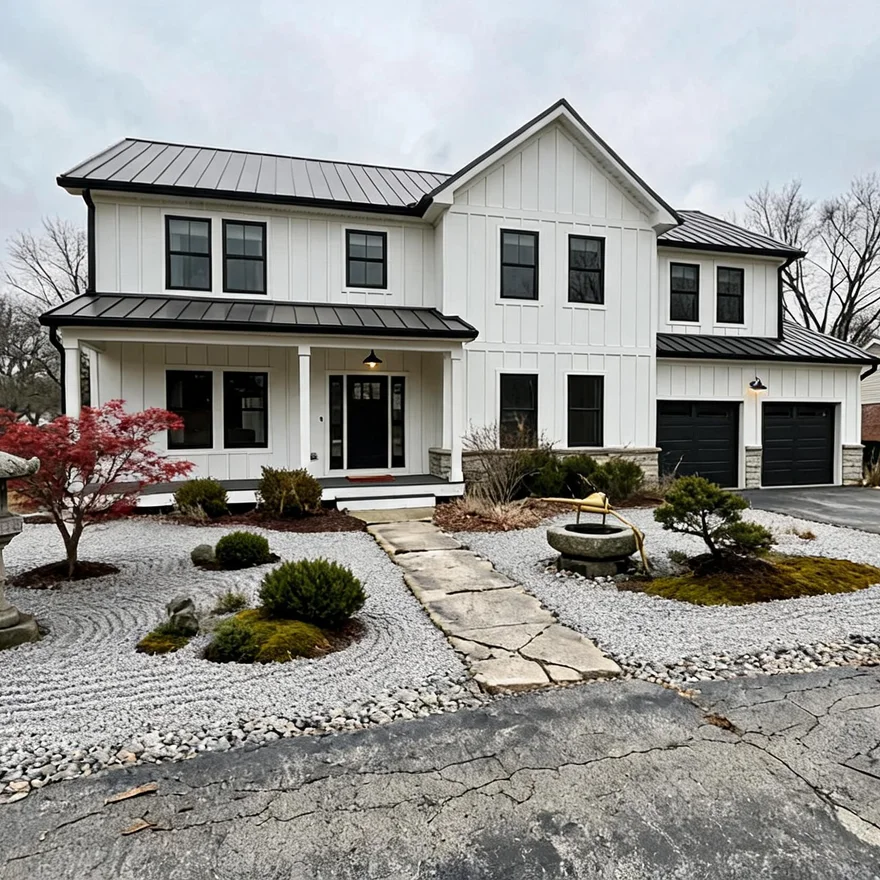
Picture the two most common "low-maintenance" yards people default to: a flat gravel lot with three sad succulents, or an all-turf lawn mowed on a schedule. Both are genuinely low-effort, and both look under-designed — which is exactly why "low-maintenance" has a bad reputation it doesn't deserve. The gap isn't the plants; it's that both examples skip layering entirely. A high-maintenance English cottage garden looks lush because it stacks tall, mid, and low plants with varied texture and color. A low-maintenance bed done the same way — layered, just with drought-tolerant and slow-growing species instead of thirsty annuals — reads as just as designed. Low-maintenance limits what you plant. It doesn't require you to stop designing.
The 7 principles of xeriscape — the real framework, not the caricature
"Xeriscape" gets reduced to "gravel and cactus" constantly, but it's actually a formal design method with seven defined principles. The term was coined by Denver Water in 1981, combining "landscape" with the Greek xeros, "dry" — and the utility still publishes the seven principles it built the method on:
- Planning and design — a real plan (even a rough sketch of the yard's zones) before anything goes in the ground, the same first step as any landscaping project.
- Soil improvements — amending soil with organic matter so it holds and releases water well. Non-native plants may need this; natives, already adapted to local soil, often do not.
- Efficient irrigation — drip, spray or bubbler emitters aimed at roots for trees, shrubs, flowers and groundcovers, rather than overhead sprinklers soaking everything equally regardless of need. (Denver Water still recommends low-pressure, low-angle sprinkler heads for the turf you do keep — the point is matching the method to the planting, not banning sprinklers.)
- Plant zones — the principle that most often goes missing when this list gets retold (see the note below). Different parts of a yard get different amounts of light, wind and moisture, so plants are grouped by shared light and water needs and placed where those needs are already met. This is the difference between a yard that waters efficiently and one that just contains drought-tolerant plants.
- Mulches — a consistent mulch layer to hold soil moisture and suppress weeds.
- Turf alternatives — replacing thirsty bluegrass where it isn't used, with low-water plantings, a patio or deck, or a less thirsty grass such as buffalo grass, blue grama or a turf-type tall fescue.
- Maintenance — planned for up front, per plant choice. Worth being honest about: Denver Water's own wording is that a new xeriscape starts out needing about as much attention as a traditional landscape and decreases over time. The savings are on the far side of establishment, not on day one.
A note on wording, because other guides run a different list. Many of them replace "plant zones" with "appropriate plant selection" — but those are two different jobs. Picking species that suit your climate is real and necessary (it's the "Choose plant categories by your climate" section below); grouping them by shared light and water needs is a separate step, and it's the one that decides whether the yard waters efficiently. A list with only the first has quietly dropped a principle rather than renamed one. You'll also see "turf alternatives" written as "practical turf areas"; that one is a genuine difference in wording, not in substance.
None of these seven principles say "no color" or "gravel everywhere." They're a water-and-effort budget, not a style — the style is up to you.
Group by water need before you group by looks
Principle #4 is the one that decides whether the yard actually saves water. Walk the yard and mark where it's sunny and dry, where it's shaded and stays damp, and where wind dries things out fastest — the strip along a south-facing wall and the north side of the house are rarely the same environment. Then put plants with matching light and water appetites together in each zone, so one watering run suits everything on it.
Skip this and you get the failure that makes people distrust the whole idea: a thirsty plant tucked among drought-tolerant ones forces you to water the entire bed on the thirsty plant's schedule, which drowns its neighbours and saves nothing. Grouping is what lets a bed be watered correctly as a unit.
Layer by height the same way a high-maintenance bed would
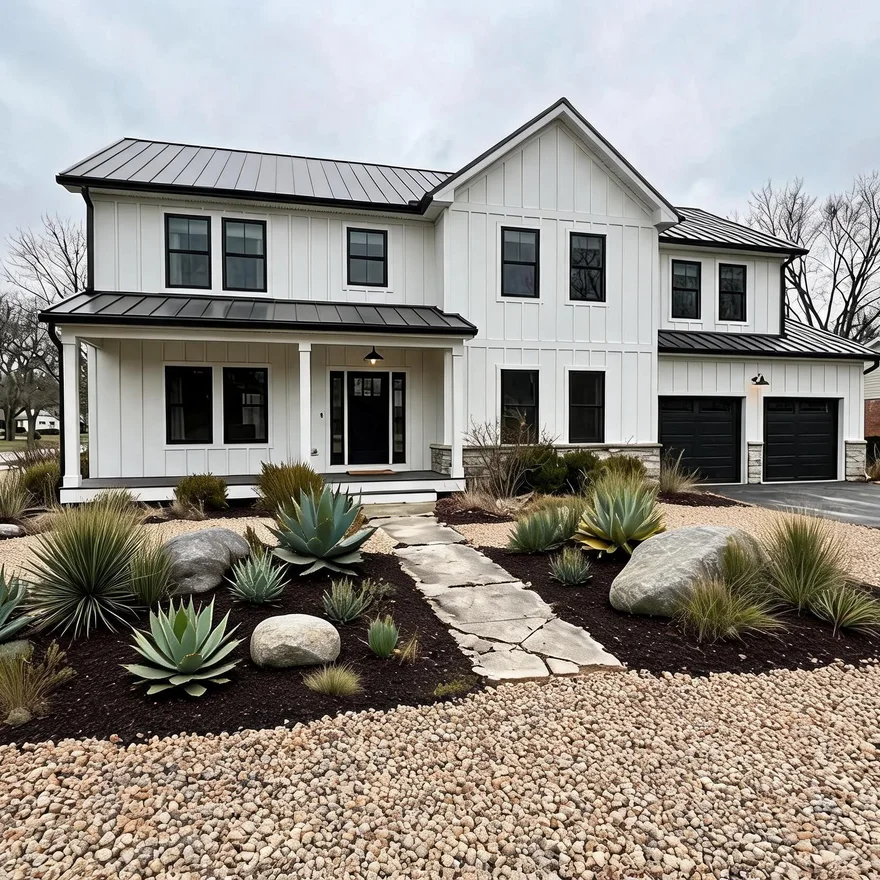
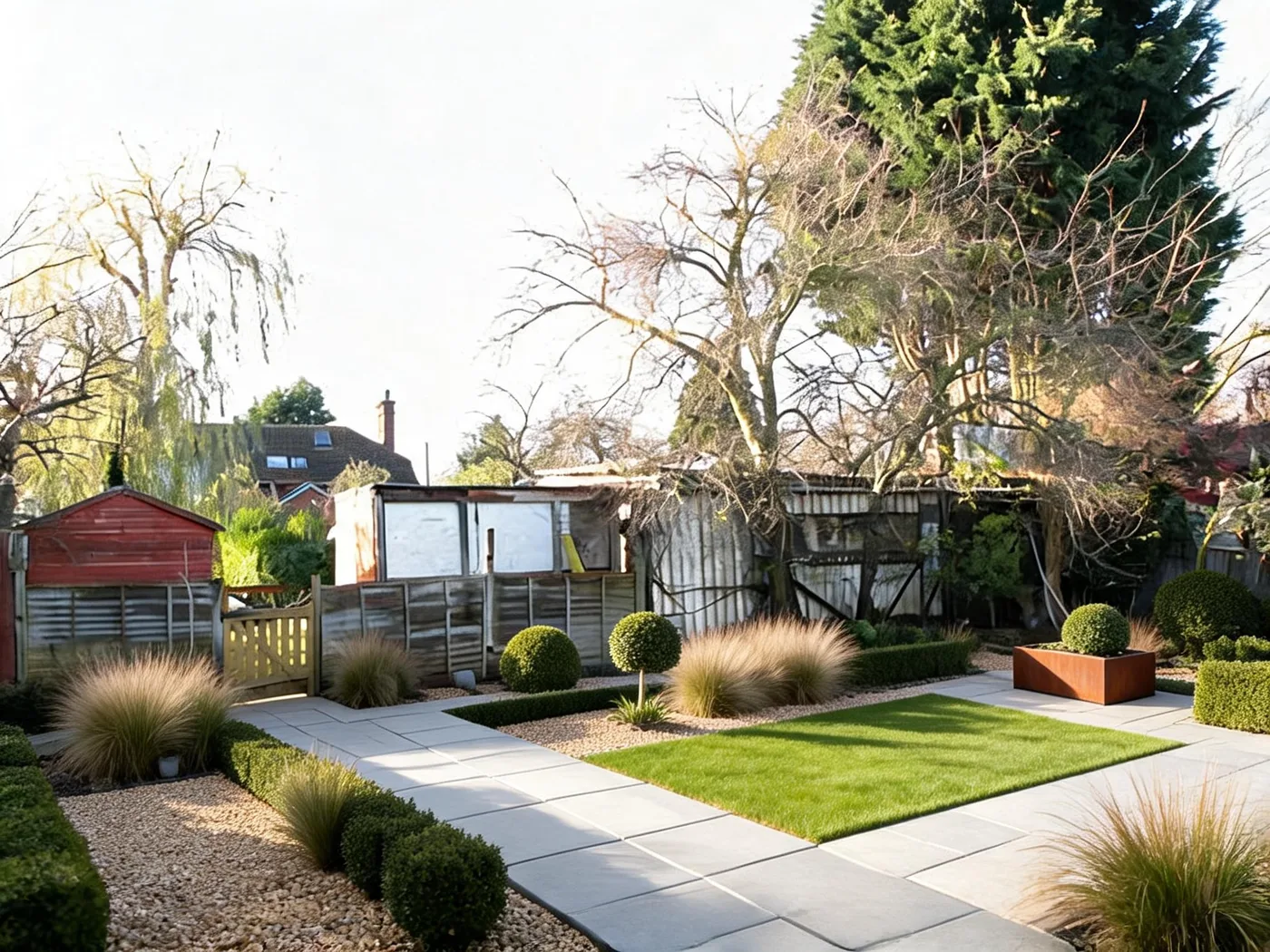
This is the single highest-leverage design move, and the one every "low maintenance ideas" list skips. Group plantings in three tiers: taller structural shrubs or ornamental grasses at the back or center, mid-height perennials and grasses in the middle, and low groundcover or clumping succulents at the front and edges. The height variation alone is most of what separates "designed" from "scattered" — a flat carpet of one groundcover species reads as bare no matter how healthy it is; the same square footage in three height tiers reads as a real garden.
Set an evergreen-to-seasonal ratio so it doesn't go flat in the off-season
A common starting ratio among low-maintenance designs is roughly two-thirds evergreen or structural planting to one-third seasonal color — ornamental grasses, spring bulbs, or a few perennial bloom cycles. The evergreen majority keeps the bed from going bare and lifeless in winter or dormancy; the smaller seasonal share is what keeps it from looking static all year. An all-evergreen bed can read as monotonous, while an all-seasonal bed goes empty for months — the ratio is what keeps both problems from happening at once.
Decide your turf strategy — don't default to "remove all grass"
Lawn isn't the enemy; unplanned, oversized lawn is. Three honest options, by what the yard is actually for:
- Keep a smaller, well-edged lawn panel if kids or pets genuinely use open turf — a well-shaped smaller lawn costs far less in mowing and water than a full edge-to-edge lawn, and reads as intentional rather than leftover.
- Replace it with groundcover or gravel-and-planting beds if the lawn is purely decorative and nobody actually walks on it — this is where most of the water and mowing savings come from.
- Artificial turf is a real option for small, high-traffic patches (a dog run, a tight side yard) where a real lawn can't establish anyway — but it doesn't cool the yard, support soil life, or handle heavy rain drainage the way real planting does, so it's a trade-off, not a default upgrade.
Match plant density to the maintenance time you actually have
Be honest about the time budget before picking plants, not after:
| Time budget | What fits | What to avoid |
|---|---|---|
| Under 1 hour/week | Fewer species, higher percentage of groundcover and evergreen structure, drip irrigation on a timer | High-density mixed perennial beds that need regular deadheading and dividing |
| A few hours/month | A wider plant palette with some seasonal perennials and light pruning | Anything requiring weekly attention (annual color rotations, high-maintenance roses) |
| Seasonal only (quarterly) | Structural evergreens, ornamental grasses cut back once a year, gravel or mulch beds | Anything that needs judgment calls between visits — pest issues or overgrowth go unnoticed too long |
If you're not sure which bucket you're actually in, pick the lower time budget — it's easier to add a perennial bed later than to fight an overgrown one you don't have time for.
Choose plant categories by your climate, not the photo
Two facts determine whether a "low-maintenance" plant actually stays low-maintenance on your yard specifically:
- Your USDA hardiness zone — tells you whether a plant survives your winter at all; a plant rated for a warmer zone than yours dies, full stop, regardless of how little water it needs.
- Your yard's actual sun exposure and soil — a drought-tolerant plant chosen for a full-sun photo struggles in a shaded side yard, and vice versa; the right category (full-sun succulents vs. shade-tolerant native groundcover, for instance) matters more than the specific species.
Check both before buying anything — a plant that's technically low-water but mismatched to your zone or exposure turns into the opposite of low-maintenance: constant replacement.
As a rough starting point by climate category (confirm actual species with a local nursery, since microclimate varies within any region):
- Hot and arid (Southwest, interior California) — succulents, agave, and ornamental grasses bred for low water are the natural fit; full xeriscape treatment tends to go furthest here since the climate matches the method directly.
- Hot and humid (Southeast, Gulf Coast) — "drought-tolerant" still matters between rain events, but plant choice also has to tolerate humidity and heavy seasonal rain; native grasses and natives adapted to wet-dry cycles usually outperform desert-style succulents, which can rot in humid soil.
- Temperate with real winters (Midwest, Northeast, Pacific Northwest) — hardiness zone matters more than drought tolerance here; structural evergreens and native perennials that go dormant well are the low-maintenance fit, and the "evergreen majority" ratio above matters most in climates with a visible winter.
Get irrigation efficient, not just infrequent
"Efficient irrigation" (principle #3) means targeted, not just less. Drip irrigation delivers water directly to roots with far less evaporation loss than overhead sprinklers, which soak everything equally including bare soil and walkways. A drip system on a simple timer is usually the single highest-return upgrade for an established low-maintenance bed — it cuts water waste and removes manual watering from the routine entirely.
Mulch is doing more work than it looks like
A consistent 2–4 inch mulch layer holds soil moisture (less watering), blocks weed seeds from germinating (less weeding), and moderates soil temperature. Organic mulch (bark, shredded leaves) breaks down and needs topping up periodically but improves soil as it does; rock or gravel mulch lasts far longer but does nothing for soil health and reflects more heat — pick organic near plantings you want to feed over time, and gravel for paths or purely decorative zones.
The honest timeline: what "low-maintenance" doesn't mean on day one
This is the part most guides leave out. Newly installed drought-tolerant and native plants still need regular, sometimes daily, watering while their root systems establish — and the honest answer to "how long" is that it depends on the size you plant, not on the species being drought-tolerant. Colorado State University Extension puts the range at days to years, noting that the smaller the plant, the more quickly it establishes; Clemson Extension similarly puts root establishment at one to several years depending on the plant's original size. In practice that means small perennials and shrubs are often settled within a season or two, while trees and large container stock need considerably longer.
The water and time savings that define "low-maintenance" show up after establishment, not immediately. Skipping establishment watering to chase the low-maintenance promise early is a common reason a new xeriscape struggles in its first year. Budget the establishment period as a real, temporary cost — not a broken promise when it turns out to be true.
Mistakes that turn "low-maintenance" into "neglected-looking"
- Single-species groundcover with no height variation — the flat-carpet look, the single biggest cause of the "bare" perception.
- All-gravel, no planting — gravel is a mulch and a hardscape material, not a substitute for the plants that make a yard read as a garden.
- Skipping establishment watering — plants that die in year one because the "low-water" label was read as "no water, ever."
- Choosing by photo instead of zone and exposure — a beautiful plant that isn't suited to your specific yard becomes a recurring replacement cost, which is the opposite of low-maintenance.
- No mulch — bare soil between plants invites the weeds that create most of the "maintenance" a low-maintenance yard was supposed to avoid.
Where to start if you're converting an existing lawn
Convert in sections, not all at once. Start with the area that gets the least foot traffic or the most sun exposure — usually a side yard or a lawn strip against a fence — and treat it as a test bed for how a layered, xeriscape-style planting performs on your specific soil and climate before committing the whole yard. This limits the establishment-watering commitment to one manageable zone at a time and lets you correct the plant mix before scaling it.
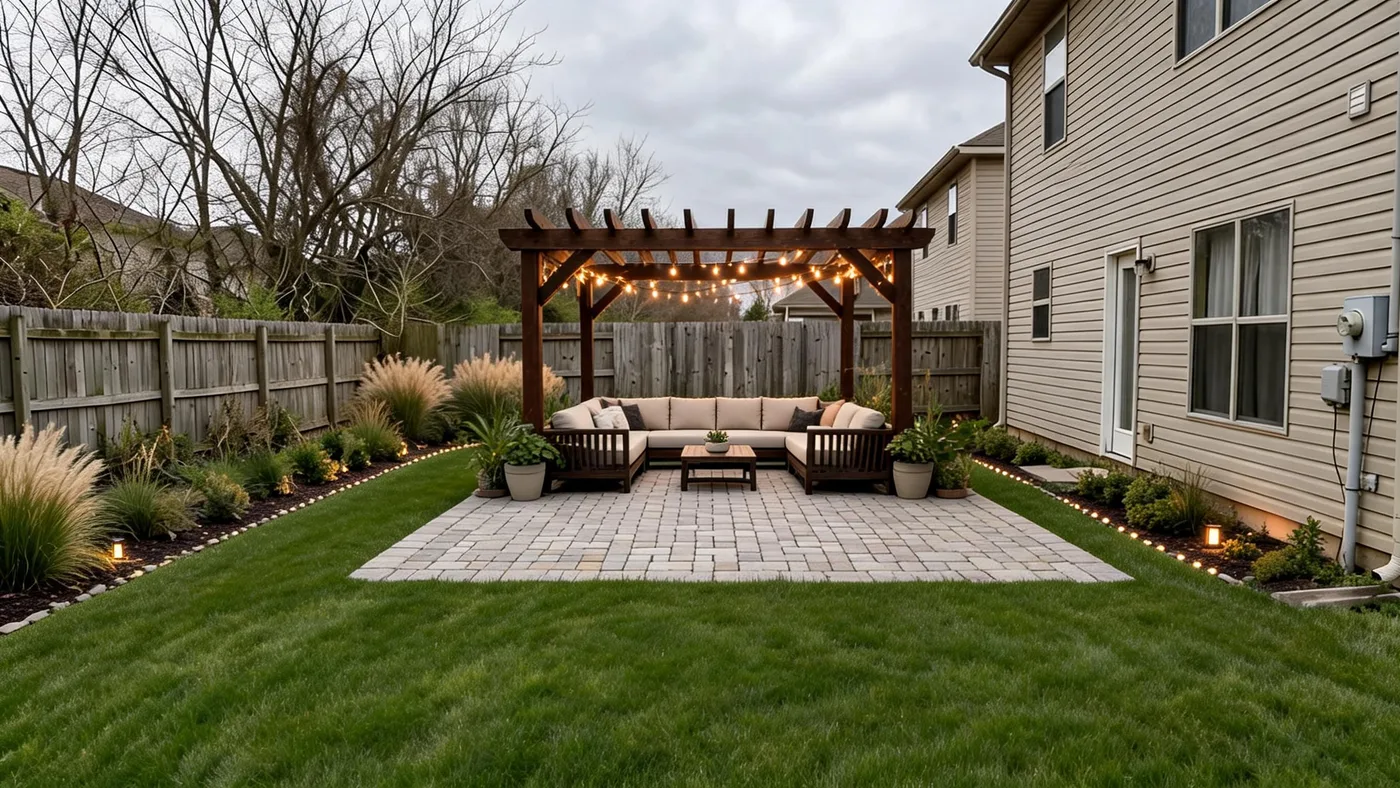
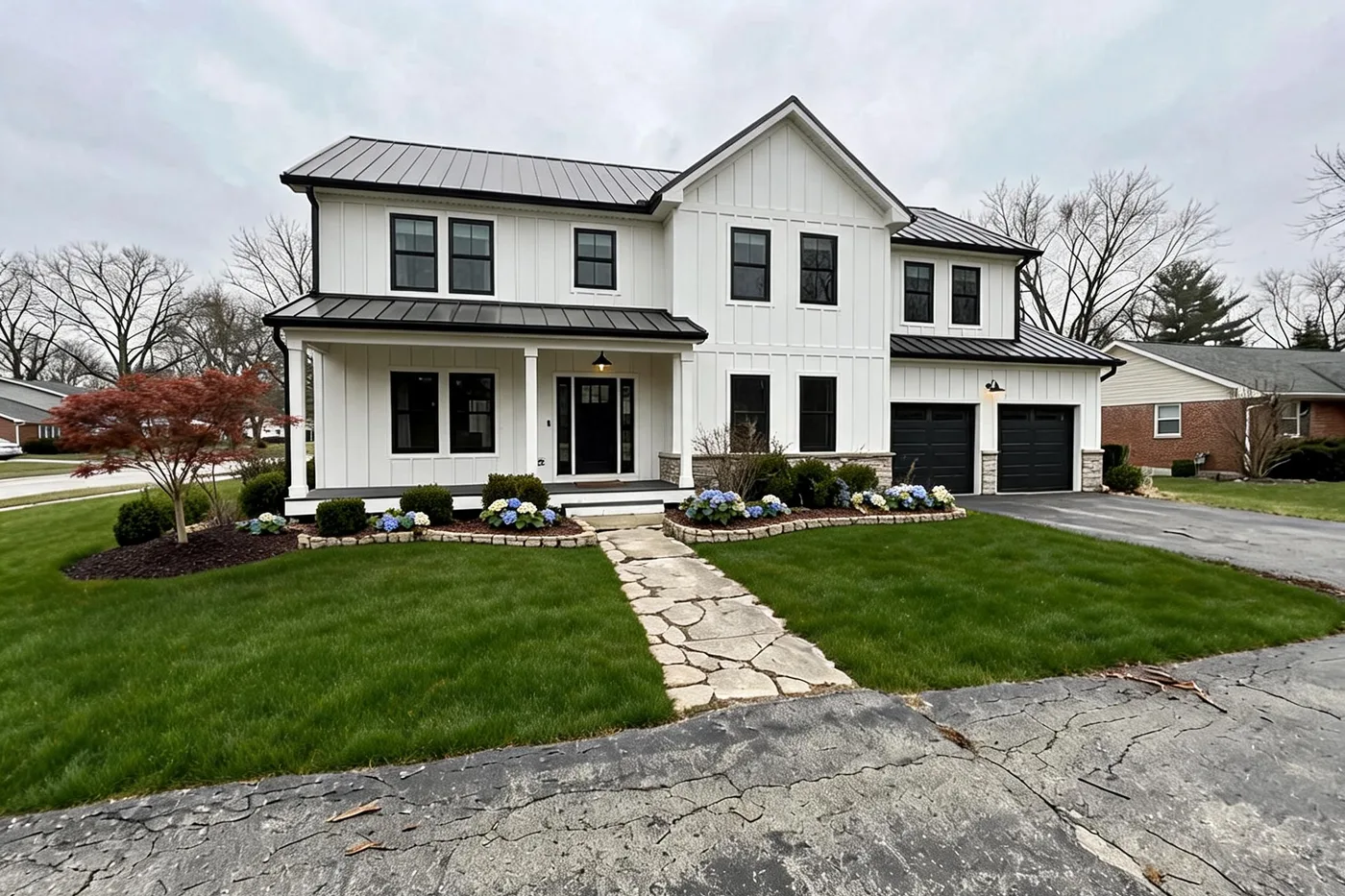
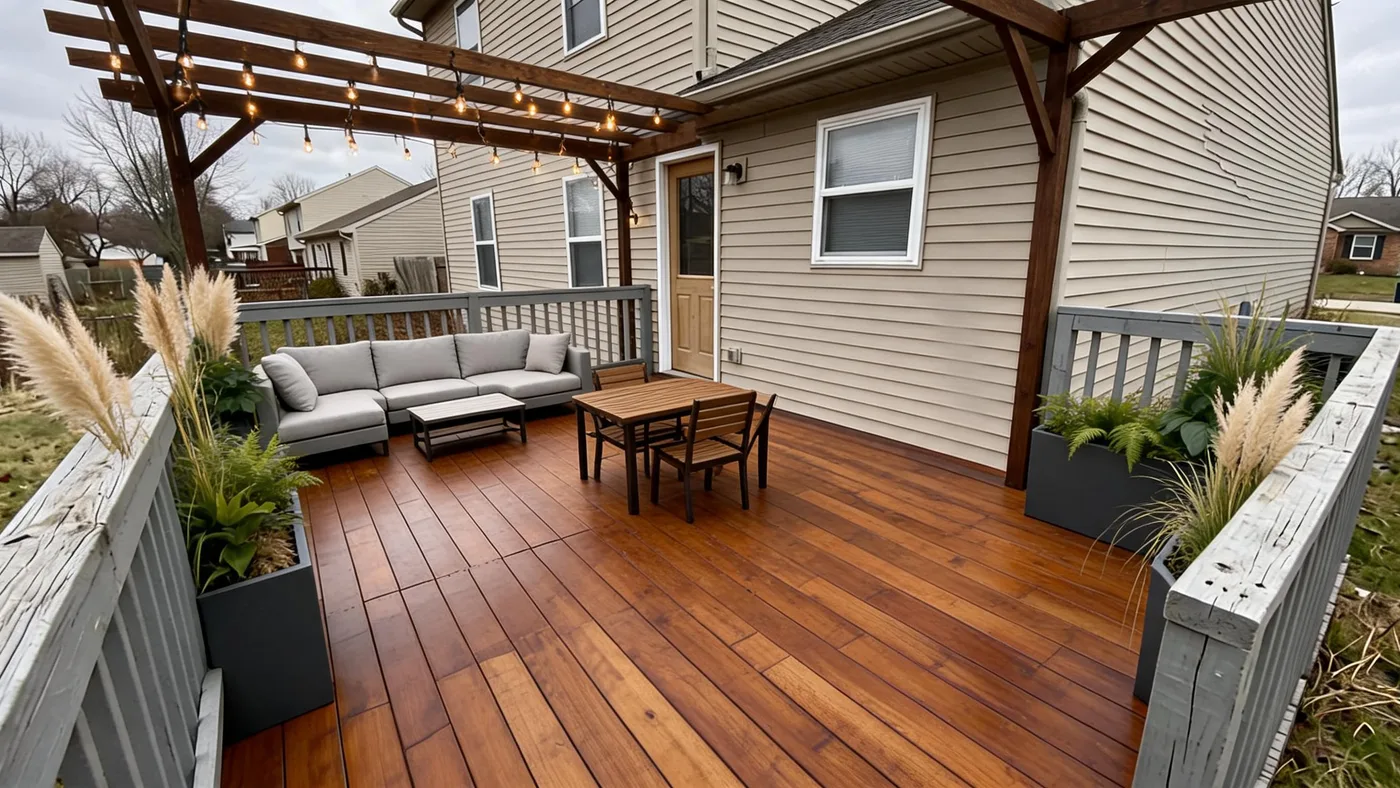
"Low-maintenance" is a design problem, not a plant-list problem — and design is easier to judge by seeing it than by reading a description of layering ratios. Upload a photo of your yard and preview a low-maintenance redesign directly on it; the house, fence lines, and property boundaries stay exactly as they are.
For the rest of the backyard — patio, privacy, lighting — see the full backyard landscaping guide, and if the front yard needs the same treatment, curb appeal ideas covers that side of the house.